The Burrow Blog
Sunday, May 10th, 2026
Signs of Burnout and How Therapy Can Help in Charleston, SC
-
Music as I wrote this blog: Shake It Out by Florence and the Machine
First of, before I jump in: Happy Mother’s Day to all who are mothers, mother figures, and caregivers in every form. Today we also hold space for those grieving, estranged, or navigating complicated feelings around this day—you are seen and not alone.
It’s 2026, and every year—well, actually, every month, for as long as I can remember—we’re told the same thing: take care of yourself. Practice self-care. Avoid burnout. Treat yourself. Don’t run yourself into the ground.
As a therapist, I hear this language everywhere. I hear it from other therapists, former coworkers, family members, and clients talking about anxiety, burnout, trauma, and the pressure to “do self-care correctly.” At this point, if we kept a running tally of how often we hear these phrases, one could argue they’re mentioned almost as frequently as Heated Rivalry—the gay hockey romance that, somehow, everyone seems to have an opinion about. (And for the record, yes, it’s excellent. I said what I said.)
But back to burnout.
Because somewhere along the way, this very real, very serious experience has become—dare I say it—a bit of a trend. Overused. Oversaturated. Almost as common as the number of people driving a Ford Bronco or Jeep Wrangler around Charleston and Mount Pleasant. (No shade to the Bronco and Wrangler drivers—they’re great vehicles, and clearly having a moment.)
And I couldn’t help but wonder…
Is self-care quietly becoming just another chore?
Have we taken something meant to support our mental health and turned it into yet another thing we can feel like we’re failing at?
And what even is burnout, really?
Is it the kind of tired where you cancel plans, stay home, and scroll through Netflix until you fall asleep? Or is it something slower—something that builds over time?
The kind of burnout I see in therapy—especially when working with anxiety and trauma—isn’t usually loud or obvious. It accumulates. It’s what happens when the energy you keep pouring into your work, your relationships, and your responsibilities never quite makes its way back to you.
Until one day, it catches up.
And maybe, here in Charleston, Mount Pleasant, Daniel Island, or anywhere else, it doesn’t always look like a dramatic collapse.
Sometimes it just looks like functioning…on empty.
What Is Burnout?
Burnout is a state of emotional, physical, and mental exhaustion caused by prolonged stress.
It can show up as:
Feeling emotionally drained
Losing motivation
Becoming detached or cynical
Struggling to concentrate
Feeling like even small tasks take enormous effort
Burnout symptoms can overlap with anxiety and depression, which is why many people don’t realize what they’re experiencing until they’ve been running on empty for quite some time.
It’s not just being tired.
It’s more like your internal system hitting its limit and quietly shutting down in response.
Like a phone that doesn’t just reach low battery—it powers off completely. And even when you plug it back in, it doesn’t immediately turn on. It needs time. Recovery. Reconnection.
How Do We End Up Here?
Burnout rarely arrives all at once. More often, it builds quietly in the background while life appears perfectly functional from the outside.
In therapy, especially when working with anxiety and trauma, I often see burnout develop in highly capable people.
The ones who show up.
The ones who push through.
The ones who are used to being the steady one.Over time, the pattern becomes familiar:
Saying yes when there’s no space left.
Ignoring early signs of exhaustion because there’s still too much to do.
Treating rest as something to earn rather than something required.
It’s not one dramatic moment.
It’s a thousand small moments where recovery gets delayed.
Until eventually, the system catches up.
Not because someone is weak, but because no system is designed to run without repair.
A Different Way to Understand Burnout
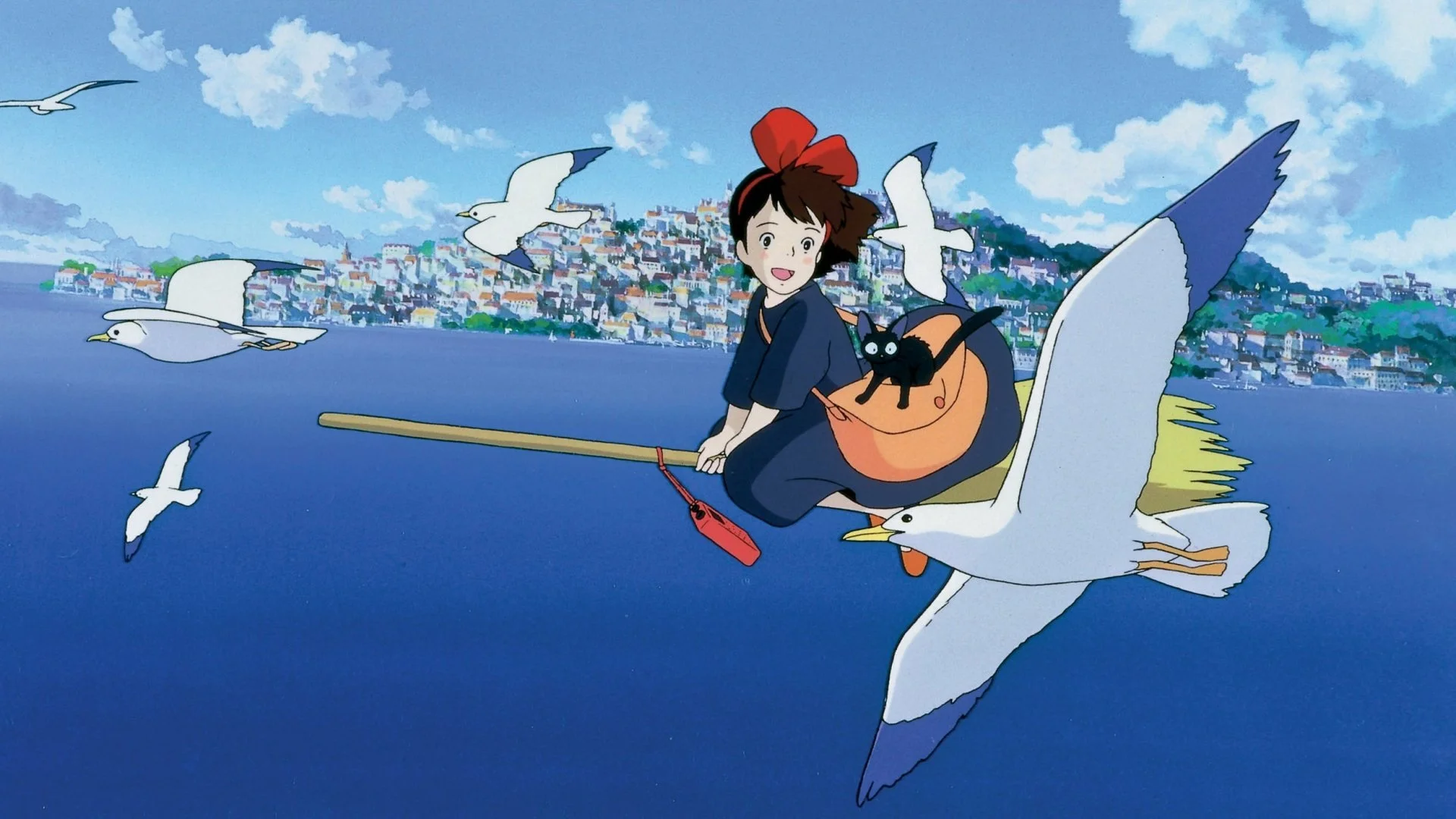
Fun fact: some of my favorite childhood films came from Studio Ghibli. And when it comes to burnout, I always think of one of my favorites: Kiki's Delivery Service.
There’s a moment in the film when Kiki loses her ability to fly.
Not because she suddenly forgets how.
She knew how to fly the moment she climbed onto her broom and set off to discover a new city where she could help others. And yes, she had some logistics to figure out. She’s gifted, but her first takeoff was nowhere near the level of a seasoned pilot flying for Delta Air Lines.
But because something she once loved—flying—begins to feel like pressure.
Like expectation.
Like work.
And in losing that connection, she loses access to what once felt natural and effortless.
So she steps back.
She rests.
She reconnects.
Not with the task itself, but with why she loved it in the first place.
And slowly, her ability returns—not by forcing it, but by restoring something internal that had been depleted.
Most importantly, some part of Kiki still believed her ability to fly was there. It wasn’t gone for good.
That’s the part of this work I love most.
Sometimes my clients feel like they’ve lost their powers entirely. But when they show up to therapy, it’s often because some part of them already knows their ability to “fly” still exists.
I love watching clients reconnect with their core beliefs and values, because there’s something incredibly powerful about finding your way back to yourself.
So What Now?
Burnout isn’t always about stopping everything.
Sometimes it’s about noticing when something meaningful has started to feel like a chore and giving yourself permission to step back before you lose access to it entirely.
Not because you’re failing at self-care.
But because you’re human, and human capacity has limits.
And maybe the real work isn’t doing more to fix burnout.
It’s noticing it early enough that you don’t have to completely lose your ability to fly before you rest.
Find something light, light, light.
Something that takes your foot off the pedal.
Something that feels effortless and free of pressure.
Maybe that looks like:
Drawing
Putting your toes in the sand
Spending an hour away from your phone and connecting with nature
Or, my personal favorite, spending 20 minutes on the floor playing with my dog, Charlie
It’s amazing how something so simple can help us refuel.
We often assume self-care has to be extravagant—a luxury vacation, a spa retreat, a perfectly curated wellness routine.
But I think that’s one of the biggest misconceptions out there.
Sometimes self-care is simply finding 20 minutes that belong entirely to you.
And what you do with those 20 minutes can be the same every time, or completely different.
That’s the beauty of it.
Burnout Therapy in Charleston, SC
If you’re feeling emotionally exhausted, overwhelmed, or disconnected from the parts of your life that once felt meaningful, therapy can help.
I provide therapy for burnout, anxiety, and trauma for adults in Charleston, Mount Pleasant, Daniel Island, and throughout South Carolina via telehealth.
Together, we can explore what’s draining your energy, reconnect with what matters most, and help you find your way back to yourself.
The Burrow Blog
Thursday, January 1st, 2026
2026 Resolution: More Grace for the “Too Much” People
Hello, 2026. It’s nice to meet you.
If we take a quick look back at 2025, it’s hard to deny she was… a character. Not entirely perfect. Not entirely horrific either. Just human—messy, emotional, and doing her best in relationships that often asked more of us than we knew how to give.
And if there’s one thing 2025 taught me, it’s this: meaningful relationships aren’t built on perfection. They’re built on how we respond to each other’s feelings—especially the ones that feel inconvenient, overwhelming, or hard to sit with.
Lately, I’ve been thinking a lot about relationships. How they can lift us up. Tear us down. Make us laugh so hard we can’t even finish the sentence explaining why we’re laughing. And how, at their worst, they can leave us feeling resentful, misunderstood, and painfully alone—even when we’re technically not alone at all.
Which made me wonder: what is it about our culture that treats “emotional baggage” like a red flag, while simultaneously demanding that people be more “emotionally available”? Last time I checked, isn’t emotional intimacy the very thing we’re all supposedly looking for?
I couldn’t help but wonder: when we tell someone they’re “too much,” what are we really saying that we’re too afraid to say out loud?
Because when we really break it down, “too much” is rarely about volume. It’s translation.
It often means: Stop burdening others with your emotions. Your feelings are an inconvenience in my life. You can’t read the room. I can’t handle you. What you’re feeling doesn’t belong here.
And no matter how casually it’s delivered, the message lands heavily.
Because here’s the thing: when someone is labeled “too much,” it’s rarely about you being over-the-top on purpose. Often, it’s a signal—they’re hurting, struggling, or in need of support.
And yes, supporting someone when it’s intense, messy, or uncomfortable isn’t always easy. But the discomfort isn’t the problem—the inattention is. Emotional intimacy requires showing up, even when it feels inconvenient.
I don’t think we fully understand how emotionally isolating words like too much, extra, dramatic, ridiculous, impossible, or exhausting can be. They don’t correct behavior—they create shame. They make people question who they are, how they feel, and whether there’s something fundamentally wrong with them for feeling deeply at all.
And really—do we think telling someone they’re “too much” is going to magically make them any less? That logic makes about as much sense as telling a depressed person to “just stop being depressed.” Because sure, that’s how feelings work.
One of the best therapists once told me that when we tell a depressed person to stop being depressed, nothing improves—and often, things get worse. Emotional dismissal doesn’t foster growth. It fosters distance. And distance, disguised as honesty, has a way of quietly eroding intimacy.
So what can we do instead?
If you’ve ever called someone “too much”:
First, lead with compassion. If someone is coming to you in distress, it usually means one of two things: they feel safe with you, or they’re in dire need of safety. Emotional safety isn’t a luxury—it’s a human need. Psychologists have been telling us this for decades. (If you need convincing, Google the Harlow Monkey Attachment Experiment and report back—with a hot cappuccino or a cup of Earl Grey ready.)
Second, listen. Really listen. You don’t have to rescue. You don’t have to solve. Most people in distress aren’t looking for answers—they’re looking to be understood.
Third, remember that clear is kind. If you’re overwhelmed or don’t have the capacity in that moment, that’s okay. You can say, “I want to understand you, but I can’t show up the way you need right now.” Boundaries don’t have to come with shame. In fact, they model emotional responsibility.
Fourth, if you can’t support them, still thank them. A sincere “thank you for trusting me” goes further than we realize. It tells someone their feelings matter—even if you’re not the person who can sit with them in that moment.
And if you’ve ever been the one labeled “too much”:
You are not too much. You were never too much.
You were honest. You were open. You were reaching for connection in a world that often rewards emotional restraint more than emotional courage.
Maybe no one is ever “too much.”
Maybe they’re just brave enough to show up fully—in relationships with people who keep confusing emotional depth with emotional danger.
And maybe the loneliest part isn’t being too much at all—it’s being loved by someone who only knows how to meet you halfway, and still asking you to shrink the rest.
But the truth is, people aren’t entirely good or entirely bad. Sometimes they’re just unpracticed. Sometimes they haven’t learned yet how to hold what they’ve never been taught to carry.
The hopeful part—the part worth staying open for—is that capacity isn’t fixed. People can learn to listen. They can learn to stay. They can learn to handle what once felt impossible—if they’re willing to try.
And the really good news? Not everyone asks you to be smaller while they figure it out. Some people stay from the start. Some people lean in. Some people don’t flinch when things get complicated, emotional, or real.
They don’t love you in spite of your depth—they love you because of it.
And just like that, you remember: sometimes the right people stay. Sometimes, they don’t just stay—they lean in, even when it’s messy, complicated, or uncomfortable. They’re already there—seeing you, sitting with you, and choosing to stay.
And to conclude, in the words of Carrie Bradshaw (yeah, sometimes she says an occasional wise thing here and there): “But the most exciting, challenging, and significant relationship of all, is the one you have with yourself. And if you find someone to love the you you love, well… that's just fabulous.”
The Burrow Blog
Sunday, October 19th, 2025
I thought Cosmos were included on this Voyage!
If you want to feel dramatic while reading this, I encourage listening to this while reading. There’s also this cool option if you want to feel like everybody wants to rule the world. Come on…you know you want to. But to make it clear, you're not being peer-pressured to listen by any means.
When we talk about being on a voyage, we like to imagine it’s something glamorous — a bougie sailing charter gliding across the Charleston Harbor, and we’re dressed up for cute photos, relaxed, and sipping on a Cosmo (yes, my drink of choice just like Carrie Bradshaw…judge free zone here) or a glass of Prosecco like we have it all figured out and look like were living our best life.
We think, “Oh, this is going to be such a fun journey! And wherever I land next? Obviously will be clutch.”
But here’s the twist: when it comes to the voyage of our personal lives — improving your mental health, fighting for that job promotion, or waiting for that guy to finally text you back about the second date — it’s rarely a luxury cruise.
It’s more like that Wolf of Wall Street moment — Leonardo DiCaprio screaming that the jet skis just went overboard. You know the one. Yeah. That’s us, trying to “trust the process.”
Because everyone loves to say it: “Trust the process, trust the process, trust the process.” Or the classic, “You’ll be fine! You’ve got all these amazing qualities!” I think we can all agree there have been times where we have heard this before, and it just made us want to scream rather than comfort us. But when the sea gets rough and we just think to ourselves what the actual hell, it’s hard not to feel like we’ve been sold a very sparkly scam.
Okay, Harry Potter moment. It's sort of the same vibes when Harry, Ron and Hermione were traveling to find those damn horcruxes and stop Voldemort from taking over the Wizarding World. Anyone else remember that awkward fight that happened between Harry and Ron? Yeah...that's the inner dialogue that happens..and it sucks. No guys, like really, really sucks.
I mean, we signed up for a journey, not a mutiny. And I couldn’t help but wonder… why don’t we ever talk about how horrific the process can actually be? Is it because we don’t want to scare anyone else off, and have fingers come back at you for discouraging someone? Or because we think if we admit it’s hard, we’ll jinx ourselves into a shipwreck?
Of course, we all want our happily ever after. But maybe it’s time to admit — sometimes the “process” is less Eat, Pray, Love and more “Eat, Cry, Caffeinate.”
They say captains go down with their ships, but honestly — would you really let your own ship sink? If someone came up and said, “The waves are bad, abandon ship!” while you’re still afloat ...would you just leap overboard? That would be like baking a batch of cookies (that were a pain in the ass to make), and then not even taking a bite. You wouldn’t just be hungry — you’d be hangry and furious. You didn’t go through all that crap for nothing.
Sure, maybe things don’t go as planned. But don’t our ships always end up somewhere?
Let’s take my man Superman (and yes, Christopher Reeve and Henry Cavill are forever the best versions for the films, Tom Welling for TV series — I will kindly argue if someone disagrees, but please, let’s all stay emotionally regulated).
When he was learning to fly, it wasn’t like, “Oh hey, I can fly now, yay!” He had to practice. He fell hard, really freaking hard. But he got back up. Sure, Jor-El was there with his intergalactic dad speeches, but ultimately, Superman had to lift himself. He could’ve sat there in his tight little blue outfit and said, “Screw this, I’m not saving the world today.” But he didn’t. He trusted himself enough to do the damn thing. Here's evidence if you're wondering...and come on...you know he's a little dreamy to look at.
And then there’s my man Sam from Lord of the Rings — 99 percent confident he is me in hobbit form. Because let's face it, we are loyal, big-hearted, and just nice dammit. And yes, rocking a few curves because well… we like POE-TAY-TOES.
In The Two Towers, he talks about those scary stories — the ones we’re afraid to finish because we don’t know if they’ll end well. He says, “How can the world go back to the way it was when so much bad happened?” But then he reminds us: it’s only a passing thing, this shadow. Even darkness must pass. And when the sun shines, it will shine out the clearer. If you're up for having a lot of feelings right now, here you go.
Those are the stories that stay with us. The ones where the heroes had every reason to turn back, but didn’t. They kept going. And that, my friends, is one hell of a voyage worth staying on.
So to conclude, I couldn’t help but wonder…
When Michelangelo was painting the Sistine Chapel for four years, do you think he never muttered, “Screw this, I’m going home?” Or did he know, somewhere deep in his exhausted artist soul, that maybe the cracks and the chaos were part of creating something so epic it would go on beyond his lifetime?
Maybe if we can remind ourselves that dark clouds don’t last forever — that one day, the sea will calm, the skies will clear, and the sun will hit just right then maybe, just maybe, we’ll start to believe that something beautiful is waiting for us on the other side.
Because sure, sometimes our dreams crash, burn, and ghost us without explanation. But does that mean the voyage is over? Or… is it just the course changing direction?
And when the waves rise, and the wind screams, and the future feels foggy as hell, you hold steady. Because the crew that's working hard for you is actually this: your courage, your hope, your passion, and even the parts that are afraid — they’re all trusting you to steer.
Because here's the common misconception: the storm doesn’t mean you’re lost. It just means you’re finally moving, just at a pace you might not enjoy.
And just like that…
I realized, maybe the bravest thing any of us can do isn’t to find calm waters. It's just keep going, just keep freaking going man. Do we really want to just stop and stay stuck at sea? Hell no, we are getting on an island (snap your fingers after reading that line...gives a little umph friends, or it's okay, be boring).
The Burrow Blog
Monday, November 17th, 2025
From the Gray Havens to Charleston Oaks: Heartbreak, Hope, and Charlotte York
Welcome to my blog, from your Mount Pleasant/Charleston gay male therapist!
Dearest Gentle Readers,
Did you miss me? A Lady Whistledown-style entrance seemed appropriate, given the pause in updates. Don’t worry — this is a ghost-free space… though you have full permission to ghost if you like. After all, we all have free will, right?
Let’s take a stroll down Colonial Lake and reflect on some journeys — both fantastical and all too human. And yes, there may be brunch, overpriced lattes, and existential musings involved. All from your Charleston/Mount Pleasant gay male therapist.
FYI… full trigger warning: this one is vulnerable. The kind of vulnerability that hits where it counts — the ache of longing, uncertainty, and hope. There’s a good chance you might feel like that random girl in Mean Girls who didn’t even go to the damn high school but still wanted everyone to know she has a lot of feelings. Lastly, don’t forget to click on the hyperlinks (underlined) for references.
Wood Elves: The Journey to the Gray Havens
The Wood Elves: elegance to the core. Reminder: Legolas was one of these elves: the one who sparked a thousand millennial crushes and a very gay awakening (for me at least...don't believe me, look here).
If Middle Earth were Charleston, these would be the folks who make brunch under the oak trees look like a Gucci fragrance campaign — leaving the rest of us questioning our skincare routines, our fashion choices, and why we just paid $10 for an iced coffee. Yes, $10. And yes, it’s worth it sometimes, but let’s not pretend it’s painless.
The complexity of the elves’ journey mirrors the paths we all walk. Some are heartbreakingly clear — like loss or death, a beloved pet, a person, or a dream that dies. Other paths are twisty, unpredictable, and full of detours. Sometimes what we think is gone may return unexpectedly, in a new form. And in between are the messy moments: walking away from something once beautiful that became toxic, letting go of something that lingers too long, stepping forward into the unknown while carrying the weight of our experiences.
Then there’s the moment that hits the heart: Sam watching the elves on the trail with Frodo, saying, “I don’t know why… but it makes me sad.” The bittersweet ache of beauty in motion, the longing mixed with awe — something exquisite passing through life, leaving an imprint that lingers.
It’s a reminder: the journey isn’t always linear. And sometimes the simplest, clearest path is the one that leads to growth, joy, and emotional survival. Even when the path feels messy or uncertain, there is beauty in the journey — even if it’s Instagram-unapproved brunch vibes kind of beauty. And yes, a few perfectly placed filters won’t hurt either.
Our Fears: Big, Dad Speeches, and the Unknown
Fear is a tricky companion — kind of like Big when it comes to Carrie. Elusive, confusing, a little heartbreaking, and always showing up at the most inconvenient moments. Carrie obsessing over him, wondering if he’ll commit, and Big — well, he’s busy being Big, avoiding the leap, and feeding Carrie's behaviors that made us all want to say, Carrie, please shut up. Fear works in much the same way: it lurks, it whispers, and convinces that the hardest path is always the bravest.
Elrond’s warning to Arwen captures this tension perfectly:
"You will linger on, in darkness and in doubt, as nightfall in winter that comes without a star."
The weight of fear can feel overwhelming: loneliness, uncertainty, longing — the raw sense of being lost. Elrond’s speech is dramatic, full of warnings, slightly terrifying, and yet somewhere hits us in our souls — like those speeches dads give their daughters on prom night, only with slightly more muggle energy. Arwen feared leaving her immortal life behind and stepping into the unknown...making her go off with her people at first. And yet, she glimpsed hope: love, family, and joy that weren’t guaranteed but were possible if she dared to choose life. Choosing Aragorn wasn’t surrender; it was courage in disguise. But hey, I think we can all agree on both ends, it was the happier choice. I mean, look here if you don't believe me.
It’s worth wondering: how often do we endure unnecessary pain, believing suffering proves strength, when the simpler, clearer choice — stepping toward hope, love, and joy — is actually braver? And maybe — just maybe — sometimes courage looks like smiling while sipping on a cup of coffee in Charleston that is worth the cost you paid (Brown Fox Coffee...you guys are fire) and saying, “I’ve got this.”
Charlotte York: Choosing Herself (and Doing It in Burberry)
Charlotte York: the sunshine of Sex and the City and the emotional icon we all need. She wanted happiness, love, and the perfect life. And yet (spoiler alert for anyone who hasn’t watched Sex and the City yet — yes, she leaves Trey, and yes, I just ruined your binge-watch surprise. Don’t hate me), perfection doesn’t always look like we imagine.
Leaving Trey wasn’t easy. It hurt. It scared her. And yet… it was the bravest act she could take. Charlotte stepped away from what looked “right” on paper and toward the life she actually wanted — a life that required trusting herself, not hoping someone else would change. Walking away, honoring herself, following her heart — that was the boldest, most powerful move.
It’s a reminder: how often do we stay in situations hoping someone else will change, or we’ll magically become stronger by enduring more, when the simplest, clearest path — stepping away, honoring ourselves, following our hearts — is actually the bravest choice? And yes, sometimes doing it in a perfect Burberry trench doesn’t hurt either (because have you seen her in Burberry? Girl rocks that. Period). Because if you’re going to walk away, darling, there's no rule saying we can't look fabulous doing it…just realized that sounded very Wendy Williams “post faint” interview-esque.
Conclusions: And Just Like That…because that's how I always end these.
1.) Sometimes the easy way out is actually the best way out. Simple as that.
2.) Admitting fear is one of the bravest acts of self-honesty.
3.) Not everything that leaves is gone forever — some things return when the timing is right. Some things are uncertain, but some things are in fact certain.
4.) Even the coldest, darkest nights pass. Stars return. Daylight comes. And brunch is always a good idea.
And just like that…
Sam learned that sadness can coexist with curiosity, and it doesn’t have to last forever.
Arwen learned that even the scariest choices can lead to joy, love, and light.
Charlotte learned that stepping away from what no longer serves you can bring hope, freedom, and the life you truly deserve.
And just like that, the dark days, the tears, and the fear — they pass. Light returns. Hope returns. And somehow, so do we.
The Burrow Blog
Monday, October 13th, 2025
On Your Feet, Sam: A Corrective Experience in Charleston
Welcome to my blog, from your Mount Pleasant/Charleston gay male therapist!
Before you read, cue the vibes — because what’s a good post without a soundtrack and make it the full cinematic experience? Choose your adventure (and, okay, maybe what I was listening while writing this):
Taylor Swift Energy Rock & Roll Energy Stevie Nicks Energy LOTR Option Harry Potter Option (if you're feeling ready to conquer while reading this, choose this one specifically)
They say traumatic experiences—especially the ones involving people we’ve built attachments to—hit different. Family, friends, lovers… the ones who leave an emotional fingerprint that lingers long after they’re gone. When that bond breaks, we call it an attachment injury.
These injuries show up in all sorts of ways:
The cinematic heartbreaks—like Big walking away from Carrie minutes before their wedding (seriously, the audacity).
The thousand-paper-cut kind: small, quiet betrayals that build over time.
They sting just as much, leaving us torn between craving emotional safety and fearing that the water we reach for might be filled with salt. And over time, we get frustrated with ourselves, wanting to slap ourselves like Cher and yell, “Snap out of it!”
In therapy, we call the moments that start to repair these injuries corrective experiences—moments that re-teach our nervous system, “Hey, it’s safe here.”
But let’s be real: we live in a world of Crumbl cookies doordashed, Netflix ready to binge, and Amazon Prime one click away. Healing? Instant gratification isn’t really an option. If only we could stroll into the Cave of Wonders, rub the genie's lamp, and wish for emotional repair. (If someone makes that happen, text me—I’ll be camping out faster than Millennials waiting for the next Harry Potter release.)
Corrective Experiences Require the Storm
Here’s the thing: corrective experiences aren’t about skipping the pain. We can’t skip the triggers. We can’t avoid the monsoon—Charleston King Tide level—before reaching calm.
The small moments of safety, reassurance, and love only feel magical because we’ve survived the flood. Maybe the real magic of healing isn’t about never getting hurt. It’s about learning that we can survive being hurt—and still matter.
Movie Therapy: LOTR & Harry Potter Edition
Think about The Fellowship of the Ring when the Fellowship escapes the mines, but Gandalf doesn’t make it out. Everyone is shattered—grief in a dozen forms. That’s an attachment injury in real time.
Then there’s the blink-and-you’ll-miss-it moment: Aragorn turns to Sam, sobbing his little hobbit heart out, and says: “On your feet, Sam.”
Simple words. Tiny moment. But a corrective experience that can move mountains: a reminder that even in our hurt, fear, and grief, we still matter. I was sipping on my Diet Coke in one hand, and tears rolling down my face—because I’m a Leo with an Aries rising and a Pisces moon, and feelings are my full-time job—letting the words sink in and thinking: yes. This is exactly it.
And then there’s Arwen riding into battle, staring down the Nazgûl, and declaring, “If you want him, come and claim him”—a moment that screams, “This is mine. You won’t take it.” Imagine telling your trauma off that way, letting it crash against your strength, and stepping out fiercer on the other side. That’s what bravery looks like.
Imagine your emotional self as an island. On it, you’ve built a cozy hut—a space of safety, where the parts of you you love, and the people you trust, are welcome.
But life tests you. Something scary approaches. Suddenly, the hut feels vulnerable. That’s normal. That’s part of the process.
Here’s the growth moment: maybe you don’t just have a hut. Maybe you’ve built a fortress, like Hogwarts under McGonagall’s spell or the Sword of Gryffindor protecting its wielder.
Each trigger, each storm, doesn’t destroy you—it strengthens the walls, makes your defenses smarter, your courage bigger. Healing isn’t tidy. It’s messy. It’s terrifying. It’s brave as hell.
And just like that...
So here’s the question I’ll leave you with: if your trauma shows up like a Nazgûl on the horizon, haunting, threatening, trying to take what you’ve built… are you ready to channel your inner Arwen, stand tall, and say, “If you want me, come and claim me” — and mean it? Or are you ready like McGonogall, ready to fangirl about a spell you've always wanted to use?
Because that, my friends, is what surviving, healing, and really living looks like.
The Burrow Blog
Monday, October 6th, 2025
Title: From Jimmy Choos to Rainbow Row: Charleston Lessons in Self-Trust
Welcome to my blog, from your Mount Pleasant/Charleston gay male therapist!
Here, you’ll find me discussing fun topics related to mental health and the everyday issues we all face — but with a little bit of flair that inspires me. You might catch a glimpse of Carrie Bradshaw stepping in with her Jimmy Choos and sassy punchlines (because let’s face it, we all love some relatable comic relief). Or you might meet the bookworm and movie nerd side of me, where I’ll pull in analogies from the worlds of fiction I love and adore — from Harry Potter to Lord of the Rings.
To be clear: any similarities to persons living, dead, or fictional are purely coincidental… yet interesting and enjoyable. But who am I to decide that, right?
So here we go — let’s take the ride together and see where this goes, folks.
They say when anxiety hits, it can feel like getting run over by a yellow school bus (see what I mean? I love a good movie reference). However, the way it crashes onto us can look quite different. For one person, it might be having to give that big presentation in front of coworkers and the boss, fearing judgment if it goes south. For others, it could simply be a reminder of something painful in the past — like seeing someone who hurt us at the Harris Teeter (and for reference, this could happen in any grocery store, so no shade to the Harris Teeter).
Let’s face it: trauma can be powerful when left untamed — sort of like Gollum and Smeagol in Lord of the Rings.
Many of us are taught to always have a backup plan, just in case our first choice fails. But I couldn’t help but wonder… are we actually selling ourselves short by doing that? Don’t get me wrong — a Plan B isn’t always a bad thing (because sometimes we need to figure out the best way to get home when traffic is bad on 17 or 526 — and traffic plus emotional dysregulation never end well. But sometimes we rely on it too heavily.
In a way, it’s almost as if we’re telling ourselves, “Well, chances are that what I really want isn’t going to happen, so I might as well go with the second-best option because it’s safer.”
We live in a culture that fears our efforts being a “waste,” or believes that if we didn’t do “enough,” we have only ourselves to blame. For many of us — especially those who have faced trauma — it’s like living in a constant tug-of-war between our Gollum side (the protector that wants to keep us safe at all costs) and our Smeagol side (the dreamer who wants to take risks and feel joy in the world). We want to listen to both, because neither are going anywhere.
So the question is this: how on earth are we going to make these two sides of us agree on anything?
Well, let’s start with the fear of “waste.”
If we really think about it — is anything ever truly a waste? Sure, many things feel like it in the moment, kind of like after watching the final two episodes of Game of Thrones and feeling nothing but anger and disappointment. But didn’t that experience teach us something? That a show like that deserved the best of the best endings because of the positive impact it had on our lives?
Now, let’s take that to something bigger. We’ve all faced rainy days, right? Yet somehow, we’ve made it through every single one. Even if we thought we were going to melt — we didn’t. We’re still here.
If anything, doesn’t that show how much strength we actually have? Maybe we’ve been looking in the wrong places for what strength really is. Some of us think strength is being the “tough one” who never backs down — but what if strength is actually allowing ourselves to fall, feel the pain, and still find the courage to get back up, knowing we might fall again?
After all, even Superman had some pretty rough landings before he learned to fly (ask Jor-El his father if you want to know more...or just watch Man of Steel featuring the one and only Henry Cavill himself).
So what if we honored our Gollum side — the part of us that protects when things feel scary — while also giving Smeagol the space to get excited about new opportunities on the horizon?
Have we ever considered that maybe, just maybe, the best plans are the ones that were never planned to begin with? Think about it — those small, unplanned moments in life. Sure, there are tough ones, but what about those surprising moments we cherish that weren’t planned at all?
Who knew Taylor Swift was going to surprise us all by dropping a new album on October 3rd and make half the world collectively gasp with excitement? Or that random moment when a stranger ahead of you in the Starbucks drive-thru bought your coffee? Or when you bumped into someone you thought you’d never see again — only to realize that door was never truly closed?
So the question I leave us to ponder is this:
When we trust ourselves — even if it starts to monsoon over The Battery and we’re left without an umbrella — is it really a setback? Or what if it’s the universe daring us to dance in the rain and find our own sunshine… all the way down to Rainbow Row.